Posts Tagged ‘life’
Animals r us, but also…

kinds of trunks

The video world that we now seem suddenly steeped in – I write from the perspective of someone who was almost 40 when the internet suddenly swept over us – has its pluses and minuses of course, and one definite plus for me is cute and often fascinating vids of non-human creatures doing smart stuff. I try not to get addicted, but it’s tough. I’m especially interested in ‘exotic’ creatures, which for me is anything I can’t encounter in my local park-lands or zoo. These videos bring such exotica into the living rooms of people like me, who worry about the time, effort and money involved in getting into the next suburb never mind darkest America or the hinterlands of Tunbridge Wells.
So I’m reading – slowly and savouringly, if that’s a word – Carl Safina’s Beyond Words, the first few pages of which – about elephants – literally brought tears to my eyes. Such exquisitely elegant and sensitive things – and that’s just the trunk.
Getting further into this inspiring book, it’s not just about elephants and other creatures whose superlative sensitivities, when brought more forcibly to our attention, are both exciting and mildly intimidating, it’s about the endless ways that complex lives can be lived. It even makes me think of the sudden surge in ‘AI’ over just the past few years, and where it will be in a few generations, as it adapts to ever more complex and challenging conditions. It ain’t going away.
But to return to conscious beings – assuming that AI hasn’t achieved consciousness quite yet – it wasn’t long ago that we preferred to believe we humans were the only ones. Safina looks at the issue early on in his book. It’s taken a long time for us to accept that we’re animals (millions, if not billions, refuse this label), and even those who have mostly believe that we’re massively exceptional, and consciousness, inter alia, is a thing that sets us apart. But what, exactly is consciousness? The neurologist Christof Koch calls it ‘the thing that feels like something’ [Safina, p21]. This subtle definition is certainly worth pondering. It doesn’t require language, it seems to me – language being another item we use to claim exceptionalism – even though we humans can name that thing – fear, anger, boredom, love, fatigue, hunger, pain etc – of which we are conscious. A hungry dog feels hungry. She’s conscious of her hunger, and that consciousness will make her start pestering her owner who’s late in feeding her.
These feelings are all in the mind. It follows that anything with a mind has consciousness. And yet we lose consciousness, when deeply asleep or under anaesthetic. Do we then lose our minds? A strange kind of thought experiment came to me recently when I noticed, without much originality, that upon waking up, it was somewhere between 6 and 7 in the morning, whereas the last time I was aware of myself it was around midnight. During that time I was ‘dead to the world’ as they say. My mind had ceased to exist. If someone had crept into my room during those hours, and gently slit my throat, would there be any real difference to my state?
Of course we know that deep sleep, or unconsciousness, isn’t the same as death, and some of us know a thing or two about REM and the three phases of non-REM sleep, but we don’t know it from experience. What we experience is the same – mostly nothingness. Non-experience. We know, because we have learned, that in those death-like states we still breathe, and blood is still pumped through our bodies. Our mind, though, has gone. We’ve ‘lost’ consciousness. It’s really quite bizarre.
Even so, it’s as common as life. Every animal sleeps, after all. Every animal loses consciousness, so every animal has a consciousness to lose. Fish sleep too, without closing their eyes, as they don’t have eye-shutters like we do. So do birds, insects, crustaceans, worms. They all lose, or greatly reduce, consciousness, so they all have consciousness to lose and recover. They all have experiences to be conscious of and learn from.
So what about plants? I mean, how low can you go? Most scientists today would agree that plant consciousness isn’t a thing, but the boundaries are certainly shifting. Early on in Daniel Dennett’s Kinds of minds he considers the development of consciousness in humans. A human’s life starts when she (or it?) becomes a fertilised egg – that’s to say, one single cell, known as a zygote. Just to confuse us, it’s also known as a diploid cell, as it contains the genetic material from two parents. Let’s accept that zygotes don’t have minds. What about blastulae? They’s mostly undifferentiated globs of cells which – well without getting into details, there’s no mind at this stage, so let’s go on to the foetal stage which starts at around eight weeks, and lasts until birth. That’s a lot of development, and presumably consciousness is one of the things that starts developing at this time, if not before…
Of course it all has to do with neural or brain development in animals. Yet many mysteries remain. Safina tells this story:
A thirty-year-old man named Roger lost about 95% of his cortex due to a brain infection. Roger can’t remember the decade before the infection, can’t taste or smell, and has great difficulty forming new memories. Yet he knows who he is, recognises himself in a mirror and in photographs, and generally acts normal around people. He can use humour and can feel embarrassed. All with a brain that does not resemble a human brain.
So it seems it doesn’t take as much as we think to make us conscious. And of course other consciousnesses, or minds, or even ways of living, can be just as impressively adaptive. Charles Darwin, in the feverish years after his Beagle adventure, was proudly intrigued by the subject, as his notebooks show:
It is absurd to talk of one animal being higher than another… People often talk of the wonderful event of intellectual Man appearing – the appearance of insects with other senses is more wonderful… Who with the face of the earth covered with the most beautiful savannahs & forests dare to say that intellectuality is only aim in this world…
Needless to say, Darwin was far more circumspect on these matters in his published work. Yet on the subject of plants he surely would’ve been chuffed to learn that, though they have no nervous system, they produce the same chemicals – including serotonin, dopamine and glutamate – essential for neurotransmission in animals like us (Safina, p23).
None of this should surprise us, I suppose, as we’ve come to learn that all life is connected. We have a relationship with every other living being on this planet, which we could trace, if we had all the time in the world…
References
Carl Safina, Beyond words: what animals think and feel, 2016
Daniel Dennett, Kinds of minds: towards an understanding of consciousness, 1996
Janet Browne, Charles Darwin, voyaging, 1995
worms!
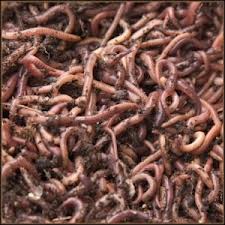
Nobody loves me, everybody hates me, thank I’ll go and eat worms
Long ones short ones fat ones skinny ones
Worms that squiggle and squirm
That’s called a kids’ song, or a campfire song, and in some versions the words are different, but that’s how I learned it in the wolf cubs as an eight-year-old, and the words often come back to me when, as quite often happens, I find that nobody loves me and everybody hates me. This is the case at present so I was heartened by watching a doco this morning on worms, and I thought I’d cheer myself by writing about them rather than eating them.
I’m talking earthworms here, just to narrow things down. The longest worm that we know of (not an earthworm) is the bootlace worm, Lineus longissimus, of the phylum Nemertea, specimens of which grow as long as 55 metres – though they’re stretchy, so that might be cheating. As for earthworms, Australia’s regarded as a hotspot of wormy diversity, according to wormologists, with the giant Gippsland earthworm, Megascolides australis, coming in as one of the biggest at up to 3 metres, and over an inch in diameter. You could base more than a couple of hefty meals on a critter that size, but sadly they’re a threatened species, another casualty of human encroachment on habitat. In fact, a great many of Australia’s 1000 or so known native earthworm species are in the same position, but for obvious reasons they don’t get the same attention as bilbies and potoroos.
As every gardener knows, worms are much valued for the way they transform the soil, providing new opportunities for the growth and development of plants. They also aerate the soil – letting in air, releasing carbon dioxide – with their burrowing activities. They don’t simply become two if they’re cut in half, though they can regenerate a chopped-off tail. They’re delicate and can be easily broken if pulled at, and in fact they have tiny gripping hairs, called setae, all over their bodies which makes them especially hard to pull out of the ground, as if you’d want to. Like me, they’re hermaphrodites (I think that’s why everybody hates me) and they breed by stretching alongside each other and exchanging sperm, a process that often lasts for many hours.
Okay, I’m not a hermaphrodite, but I may as well be, and a two-headed one at that.
Worms make great food for birds, platypuses and the occasional intrepid toddler, and their excreta, aka castings, the end-product of incessant organic digestion, is taken up by plants, and is full of such goodies as phosphorus, nitrogen, calcium and magnesium. They like and need moisture, and in fact the giant earthworm can be detected by the underground squelching and gurgling created by their activities.
The basic worm anatomical structure, whether you’re talking land or sea, has been around a very long time, and obviously has proved very effective and enduring. It’s believed that the first-ever vertebrate creature (according to current knowledge), the ocean-living chordate Pikaia gracilens, incorporated the beginnings of a backbone into its worm-like body some 500 million years ago. That makes worm-eating a form of cannibalism. In fact, eating itself is a form of cannibalism and we really should stop.
Let’s look at how earthworms get around. The direction of their movement is a response to light and to soil chemistry as it impacts on skin cells. They move by expanding and contracting their muscles, anchoring themselves as they go with their setae, which they put out and retract as they go. Skin secretions help to bind the soil around them, easing their burrowing passage. Like us, they move a lot more sluggishly (probably not a good choice of words) in the cold weather.
So, that’s it for worms, for now. I’ve opened a few cans of them in my time, but I’ve always been reluctant to examine the contents. See how I’ve changed.

a dish of mopane worms – a fave from Zimbabwe