Archive for the ‘other life’ Category
how did life begin? part 1 – Greenland rocks, warm little ponds and unpromising gunk

the basics of the Miller-Urey experiment: sparking interest
Jacinta: Well, we need an antidote to all that theological hocus-pocus, so how about a bit of fundamental science for dummies?
Canto: Sounds great, I just happened to read today that there are three great questions, or areas of exploration for fundamental science. The origin of the universe – and its composition, including weird black holes, dark matter and dark energy – that’s one. The others are the origin of life and the origin of consciousness. Take your pick.
Jacinta: I’ll choose life thanks.
Canto: Not a bad choice for a nihilist. So life has inhabited this planet for about three and a half billion years, or maybe more, while the planet was still cooling from its formation…
Jacinta: Isn’t it still doing that?
Canto: Well, yes of course. An interesting study conducted a few years ago found that around 54% of the heat welling up from within the earth is radiogenic, meaning that it results from radioactive decay of elements like radium and thorium. The rest is primordial heat from the time of the planet’s coalescing into a big ball of matter.
Jacinta: Gravity sucks.
Canto: Energetically so.
Jacinta: You say three and a half billion years or more – can you be a bit more specific? Are we able to home in on the where and the when of life’s origin on this planet?
Canto: Well, that would be the pot of gold, to locate the place and time of the first homeostatic replicators, to wind back history to actually witness that emergence, but I suspect there would be nothing to actually see, at least not on the time-scale of a human life. I think it’d be like the emergence of human language, only slower. You’d have to compress time somehow to witness it.
Jacinta: Fair enough, or maybe not, it seems to me that the distinction between the animate and the inanimate would be pretty clear-cut, but anyway presumably scientists have a time-frame on this emergence. What allows them to date it back to a specific time?
Canto: Well, it’s an ongoing process of honing the techniques and discovering more bits of evidence, a bit like what has happened with defining the age of our universe. For example, you’ve heard of stromatolites?
Jacinta: Yes, those funny black piles that stick out of the water and sand, somewhere in Western Australia? They’re made from really old fossilised cyanobacteria, right?
Canto: Well, that’s a start, they’re rather more complicated than that and we’re still learning about them and still discovering new deposits, all around the world, both on the shoreline and inland. But the Shark Bay stromatolites in WA were the first to be identified, and that was only in 1956. More recently though, there’s been an entirely different discovery in Greenland that’s raised a lot of excitement and controversy…
Jacinta: But hang on, these stromatolites, they say they’re really old, like more than 3 billion years, but how do they know that? As Bill Bryson would say.
Canto: Well, good question Jass, in fact it’s highly relevant to this Greenland discovery so let me talk about radiometric dating, using this example. Greenland has been attracting attention since the sixties as a potential mineral and mining resource, so the Danish Geological Survey was having a look-see around the region of Nuuk, the capital, in the south-west of the island. The principal geologist found ten successive layers of rock in the area, using standard stratigraphic techniques that you can find online, though they’re not always easy to apply, as strata are rarely neatly horizontal, what with crustal movements, fault-lines and rockfalls and erosion and such. Anyway, it was his educated guess that the bottom of these layers was extremely old, so he sent a sample to Oxford, to an expert in radiometric dating there. This was in about 1970.

Isua rocks, Greenland. Oldest rocks discovered, showing plausible traces of 3.8 billion-year-old life
Jacinta: And doesn’t it have to do with radioactive isotopes and half-lives and such?
Canto: Absolutely. Take uranium 238, which if you’ve been watching the excellent recent ABC documentary you’ll know that it decays through a whole chain of, from memory, twelve nuclides before stabilising as an isotope of lead. That decay has a half-life of 4.5 billion years – longer than the life of this planet, or at least the life of its crust. So it’s a matter of measuring the ratio of isotopes, to see how much of the natural uranium has decayed. In this case, the gneiss, the piece of bottom-strata rock that was analysed, had the highest proportion of lead in it of any naturally occurring rock ever discovered.
Jacinta: So that means it’s likely the oldest rock? Aw, I thought Australia had the oldest. This is terrible news.
Canto: No time to be parochial when the meaning of life is at stake. May I continue? So this was an exciting discovery, but more was to come, and it’s continuing to come. The geological team were inspired to continue their explorations around the Godthaab Fjord in Greenland, and found what are called ‘mud volcanoes’, pillows of basaltic volcanic lava that had issued out into the seawater. These were again dated at about 3.7 billion years old, and this strongly suggested the existence of warm oceans at that time, with hydrothermal vents such as those recently discovered to be teeming with life…
Jacinta: Right, so that might be pushing the age of life back a few hundred million years, if it can be verified, but it still doesn’t answer the how question..
Canto: Oh, nowhere near it, but I’ve just started mate. May I continue? Not surprisingly this region is now seen as a treasure trove for those hunting out the first life forms and trying to work out how life began. It was soon found that the Isua greenstone to the north of Nuuk contains carbon with a scientifically exciting isotopic ratio. The level of carbon 13 was unexpectedly low. This is generally an indication of the presence of organic material. Photosynthesising organisms prefer the lighter carbon 12 isotope, which they capture from atmospheric or oceanic carbon dioxide. But the finding’s controversial. Many are skeptical because this is the period known as the ‘late heavy bombardment’, with asteroids crashing and smashing and vaporising and possibly even sterilising… and they haven’t discovered any fossils.
Jacinta: So, photosynthesis, that’s what created the great oxygenation, which created an atmosphere for complex oxygen-dependent organisms, is that right?
Canto: Well, that was much later, and it’s a vastly complex story with quite a few gaps in it, so maybe we’ll save it for future conversations…
Jacinta: Okay, fine, but couldn’t one of those asteroids have brought life here, or proto-life, or the last essential ingredient…?
Canto: Yes, yes, maybe, but you’re distracting me. May I please continue? Where was I? Okay, so let’s look at the various theories put forward about the origin of life – and it will bring us back to Greenland. You’ve mentioned one, called panspermia. That’s the idea that life was seeded here from space, maybe during the heavy bombardment…
Jacinta: Which isn’t an adequate explanation at all, because where did that life come from? I want to know how any life-form anywhere can spring from the inanimate.
Canto: Yes all right, don’t we all smarty-pants? One of the most interesting early speculators on the subject was one Charles Darwin, who wrote – very famously – in a letter to his good mate Joseph Hooker in 1871, and I quote:
It is often said that all the conditions for the first production of a living organism are now present, which could ever have been present.— But if (& oh what a big if) we could conceive in some warm little pond with all sorts of ammonia & phosphoric salts,—light, heat, electricity &c present, that a protein compound was chemically formed, ready to undergo still more complex changes, at the present day such matter wd be instantly devoured, or absorbed, which would not have been the case before living creatures were formed.
Now this was pretty damn good speculation for the time, and a couple of generations later two biologists, Aleksandr Oparin of Russia and John Haldane of England, independently developed a hypothesis that built on Darwin’s ideas.
Jacinta: Oh yes, they had this idea that if you added a bit of lightning to the early terrestrial atmosphere, which was full of ammonia or something, you’d get a lot of organic chemistry happening.
Canto: Well I think the ‘or something’ part is true there – their idea was that there was a lot of hydrogen, methane and water vapour in the early atmosphere, and that, combined with local heat caused perhaps by lightning, or volcanic activity or some sort of concentrated solar radiation, the combo created a soup of organic compounds, out of which somehow over time emerged a primordial replicator.
Jacinta: So far, so vague.
Canto: Okay, I’m just getting started. The Oparin-Haldane hypothesis was highly speculative, of course. The point being made was that this key event was all that was needed for natural selection to kick in. This replication must have been advantageous, and of course over time there would’ve been mutations,with the mutants competing with the originals, and the winners would’ve been the most efficient and effective harvesters of resources, and there would’ve been expansion and more mutations and modifications and so forth. And out of that would come the first self-sustaining homeostatic environment, the proto-cell, within which more sophisticated machinery for processing resources could be developed…
Jacinta: Okay so you’ve more or less succeeded in dissolving the boundary between the animate and the inanimate before my eyes, but it’s still pretty vague on the details.
Canto: In 1953, Stanley Miller took up the challenge of his supervisor, famous Nobel Prize-winning biologist Harold Urey, who noted that nobody had tested the Oparin-Haldane hypothesis experimentally. Miller created a mini-atmosphere in a bottle, using methane (CH4), hydrogen, water vapour and ammonia (NH3), and after sparking it up for a while, he managed, to the amazement of all, to produce amino acids, the building blocks of proteins. Surely the first step in producing life itself.
Jacinta: Ah yes, that was a famous experiment, but didn’t it turn out to be something of a dead end?
Canto: Well, yes and no. It has been replicated with different mixtures and ratios of gases, and amino acids, sugars and even traces of nucleic acids have been generated, but nothing that could be described as a primordial replicator. But of course this work has got a lot of biologists thinking.
Jacinta: But this was 60 years ago. That’s a lot of thought without much action.
Canto: Well, what has since been realised about the experiments of Miller and others is that they create an enormous complexity of organic molecules in a rather uncontrolled way, a kind of chemical gunk similar to what might be created when you burn the dinner. The point being that when you burn the dinner – which is something necessarily organic like a dead chook, or pig, or tragically finless shark or whatnot…
Jacinta: Or a pumpkin, or Nan’s rhubarb pie..
Canto: Yeah, okay – you get this messy complexity, all mixed with oil and vinegary acids and shite – you get this break-down into gunk, and that’s easy. What’s hard is to go in the other direction, to build up from gunk into a fully fledged chicken, or a handsomely finned shark. And that’s what these experiments were trying to do, in their small way. They were creating this primordial-soup-gunk and hoping, with a bit of experimental help, to spark life into it, and basically getting nowhere. The problem is essentially to do with randomness and order. How do we get order out of random complexity? It’s easy to go the other way, for example with explosions and machine guns and such. We see that everywhere. But building the kind of replicating order that you find even in mycoplasma, the smallest genus of bacteria, from scratch, and by chance – well, that’s mind-bogglingly improbable.

mycoplasma, one of the simplest life forms – but try making one from scratch
Jacinta: So we have to think in terms of intermediate stages.
Canto: Yes, well, there are big problems with that, too… But let’s give it a rest for now. Next time, we’ll discuss the RNA world that most biologists are convinced preceded and helped create the DNA world we live in.
N B – This piece owes much to many, but mainly to Life on the edge: the coming of age of quantum biology, by Jim Al-Khalili & Johnjoe McFadden
the anthropic principle lives on and on

The anthropic principle, the idea that the universe – and let’s not muddle up our heads with multiverses – appears to be tweaked just right, in a variety of ways, for the existence and flourishing of humans, has long been popular with the religious, those invested in the idea of human specialness, a specialness which evokes guided evolution, both in the biological and the cosmological sense. And, of course, God is our guide.
Wikipedia, God bless it, does an excellent job with the principle, introducing it straight off as the obvious fact that anyone able to ascertain the various parameters of the universe must necessarily be living in a universe, or a particular part of it, that enables her to do the ascertaining. In other words the human specialness mob have it arse backwards.
So I’ll happily refer all those questing to understand the anthropic principle, in strong and weak forms, it proponents and critics, etc, to Wikipedia. I’ve been brought to reflect on it again by my reading of Stephen Jay Gould’s essay, ‘mind and supermind’, in his 1985 collection, The Flamingo’s Smile.
Yes, the anthropic principle, which many tend to think is a clever new tool for deists, invented by the very materialists who dismiss the idea of supernatural agency as unscientific, is an old idea – much more than 30 years old, because Gould was critiquing not only Freeman Dyson’s reflections on it in the eighties, but those of Alfred Russel Wallace more than a century ago, in his 1903 book Man’s Place in the Universe. Gould had good reason for comparing Dyson and Wallace; their speculations, almost a century apart, were based on vastly different understandings of the universe. It reminds us that our understanding of the universe, or that of the best cosmologists, continues to develop, and, I strongly suspect, will never be settled.
Theories and debates about our universe, or multiverse, its shape and properties, are more common, and fascinating, than ever, and accompanied by enough mathematics to make my brain bleed. The other day one of my regular emails from Huff Po science declared that maybe the universe didn’t have a beginning after all. This apparently from some scientists trying to grab attention in a pretty noisy field. I’ve only scanned the piece, which I would hardly be qualified to pass judgment on. But not long ago I read The Unknown Universe, a collection of essays from New Scientist magazine, dedicated to all ideas cosmological. I didn’t understand all of it of course, but genuine questions were raised about whether the universe is finite or infinite, about whether we really understand the time dimension, about how the laws that govern the universe came into being, and many other fundamental concepts. It’s interesting then to look back to more than a century ago, before Einstein, quantum mechanics, and space probes, and to reflect on the scientific understanding of the universe at that time.

A version of the universe, based on Lord Kelvin’s calculations, used by Wallace
In Wallace’s time (a rather vague term because the great scientist’s life spanned 90 years, which saw substantial developments in astronomy) the universe, though considered almost unimaginably massive, was calculated to be much smaller than today’s reckoning. According to a diagram in Man’s Place in the Universe, it ended a little outside the Milky Way galaxy, because we had no tools at the time to measure any further, though Lord Kelvin, the dominant figure in physics and astronomy in the late 19th century, made a number of dodgy calculations that were taken seriously at the time. In fact, Kelvin’s figures for the size of the universe, and for the age of the earth, though too small by orders of magnitude, were considered outrageously huge by most of his contemporaries; but they at least began to accustom the educated public to the idea of ginormity in space and time.
But size wasn’t of course the only thing that made the universe of that time so different from our own conceptions. The universe of Wallace’s imagination was stable, timeless, and, to Wallace’s mind, lifeless, apart of course from our planet. However, he doesn’t appear to have any good argument for this, only improbability. And an odd kind of hope, that we are unique. This hope is revealed in a passage of his book where he goes off the scientific rails just a bit, in a paean to our gloriously unique humanity. A plurality of intelligent life-forms in the universe
… would imply that to produce the living soul in the marvellous and glorious body of man – man with his faculties, his aspirations, his powers for good and evil – that this was an easy matter which could be brought about anywhere, in any world. It would imply man is an animal and nothing more, is of no importance in the universe, needed no great preparations for his advent, only, perhaps, a second-rate demon, and a third or fourth-rate earth.
Wallace, though by no means Christian, was given to ‘spiritualism’, souls and the supernatural, all in relation to humans exclusively. That’s to say, he was wedded to ‘human specialness’, somewhat surprisingly for his theory of evolution by wholly natural selection from random variation. This is the chain, it seems, that links him to modern clingers-to the anthropic principle, such as William Lane Craig and his epigones, who must needs believe in a value-laden universe, with their god as the source of value, and we humans, platonically created as the feeble facsimiles of the godhead, struggling to achieve enlightenment in the form of closeness to the Creator, with its appropriate heavenly rewards. And so we have such typical WL Craigisms as ‘God is the best explanation of moral agents who apprehend necessary moral truths’, ‘God is the best explanation of why there are self-aware beings’ and ‘God is the best explanation of the discoverability of the universe [by humans of course]’. These best explanation ‘arguments’ can be added to ad nauseum, of course, for they’re all of a part, and all connected to the Wallace quote above. We’re special, we must be special, we must be central to the creator’s plan, and our amazingness, our so-much-more-than-animalness, in spite of our many flaws, suggests a truly amazing creator, who made all this just for us.
That’s the hope, captured well by the great French biologist Jaques Monod when he wrote
All religions, nearly all philosophies, and even a part of science testify to the unwearying, heroic effort of mankind desperately denying its contingency.
I think modern philosophy has largely moved on from desperate denialism, but Monod’s remarks certainly hold true for religions, past present and future. Basically, the denial of our contingency is the central business of religion. It’s hardly surprising then that the relationship between religion and science is uneasy at best, and antagonistic at its heart. The multiverse could surely be described as religion’s worst nightmare. But that’s another story.
some interesting beasties: cheetahs

Sadly I don’t have so much time for writing these days, especially anything too strenuous or research-based, so I think I’ll do a series on organisms that have interested me over the years – or that I’ve just recently been fascinated by, for that matter.
Over at Not Exactly Rocket Science, there’s an article to whet the appetite as well as to apply a corrective to our thinking about everyone’s favourite wild cat, the cheetah (the name derives from Sanskrit, and cheetahs are found in Iran as well as Africa, and were probably more widespread in Asia in earlier times). Cheetahs are a vulnerable species, with about 10,000 of them currently existing in the wild. They’re described as a ‘charismatic species’, meaning that they’re utilised a lot as ‘ambassadors’ to draw attention to environmental and habitat issues for wildlife in general – along with elephants, humpback whales, giant pandas, California condors, grey wolves and such.
Cheetahs are, of course, built for speed in every way, though agility, with an incredible acceleration and deceleration rate, is also a key to their success. They can accelerate from zero to 40mph in just three strides – faster than the most sophisticated racing cars. Claims that their lightning runs leave them half-dead with heat exhaustion much of the time are, however, wildly exaggerated, as are the claims that they lose as much as half of their kills to lions and hyenas. In fact, cheetahs use up far more of their energy seeking out or tracking down potential kills than they do actually chasing them. A cheetah sprint takes up only 45 seconds a day on average – that’s less time than I spend on my high intensity interval training.
The key to maintaining cheetahs in the wild, then, is not to add to their greatest and most energy-sapping problem: finding food. Adding obstacles to their habitat, such as fences and enclosures, and depleting that habitat of their favourite food – gazelle, deer and impala, and the odd young zebra or springbok – would make life that bit more painful for them.
Speed, of course, is the cheetah’s big specialisation, what it’s adapted for. In fact over-specialisation is arguably its main problem, as it doesn’t have the bulk or strength to fight off other predatory mammals, all of which annoyingly compete for the same food. It’s light, with a weight that averages around 50 kgs, and its aerodynamically evolved head and body trade speed for strength, meaning that its jaws and teeth don’t have the size or force of other wild cats. It has a flattened ribcage but larger than usual heart and lungs for large intakes of air and fast pumping of blood. It also has a longer and larger tail than most cats, which it uses as a rudder for balance as it sets off on one of its twisting and turning runs. Its claws are only semi-retractable, unlike those of most cats (its genus name, Acinonyx, is Greek for ‘no-move claw’). This gives it extra grip while running. Males and females are the same size and hard to tell apart from distance.
Cheetahs don’t roar but they make up for it with a range of other noises, including purring like a – well, a cat, when experiencing domestic plenitude. They also hiss, spit, growl and even yowl when faced with danger. Cubs make a bird-like chirping sound, and the mother makes a similar sound when trying to locate her young. A sound called churring – no idea what that sounds like – is used on social and sexual occasions between adults. Male cheetahs form lifelong partnerships, often but not always with brothers, while females are solitary, bringing the kids up by themselves. They tend to mate with a variety of males – which hardly makes it mating, really. Interestingly, though the females are regular hunters, they’re not territorial, unlike the males, who practice group territoriality, each member of the gang contributing his scent.
Female cheetahs put their kids – or those that survive, as there’s a heavy infant mortality rate – through a tough survival training schedule before abandoning them at around 18 months. At around 2 years of age the females go their lonesome ways and the males hang together, sometimes combining with other blokes. It seems to work for them. In fact I think I read somewhere that males live longer on average than females, which wouldn’t surprise me. Fending for yourself all the time’s a deadly business, even when it’s all laid on in the big smoke, never mind having to chase your meals every day into old age. So spare a thought for the cheetahs, especially the girls, under-appreciated as always.
who fought who in the upper cretaceous?

Pachyrhinosaurus
So here I am at lovely Victor Harbour on Encounter Bay where England’s Matt Flinders and co encountered France’s Nick Baudin and co most unexpectedly over 200 years ago as each expedition was sailing round this great south land in opposite directions, mapping and exploring and discovering, but I’m not going to tell that story, I’m going to explore a much earlier era, as we spent a little over an hour in the heat of the day in the local cinema, watching a thing called Walking with dinosaurs – the movie. I think this was a companion-piece to Walking with dinosaurs – the real thing, or something like that. Anyway, it was aimed largely at kids, with a horribly anthropomorphised storyline replete with Yank cliches, in Yank accents, in spite of its being a BBC production. The animation was fine though, and hey it was dinosaurs, so more or less bearable.
But what about historical accuracy? Wouldn’t want to be leading kids up the garden path. The story, we’re told, takes place 70mya, in what’s now Alaska. Our hero starts life as the runt of the litter, and of course ends up as the leader of a herd of hundreds if not thousands. He’s a pachyrhino or something, and they headbutt for control of the females, and other males, and have to fight off their natural predators, the omnivorous gorgosauri. He also at one stage gets adopted by a wandering herd of gigantic edmontosauri, a herbivorous bunch. I’m no dinosaur expert but I’ve never heard of any of these beasties, whose names are presented to us with an air of scientific authenticity.
Well, as it turns out they’re all quite real (what was I thinking, BBC and all). Gorgosaurus (‘fierce lizard’) is known to have roamed about the region of modern Alberta, Canada some 75mya (the late or upper Cretaceous). Weighing in at more than 2 tonnes, it was an apex predator, a genus of tyrannosaurid therapod dinosaur, and is one of the best-represented tyrannosaurid therapods, with dozens of specimens found, so shame on me for my ignorance. Smaller than Tyrannosaurus, to which it’s distantly related, it’s often confused with Albertosaurus, and they may simply be variants. As with all tyrannosaurids, its massive head is crammed with teeth, though not so many, and not so blade-like, as T rex. The Wikipedia article on gorgosaurus is incredible detailed and overwhelmingly rich for dilettantes comme moi, but it’s well worth a visit.

Gorgosaurus libratus
The protagonist of the movie was a Pachyrhinosaurus. They inhabited the Alberta and Alaska regions from 79 t0 66mya. They’re a genus (of which 3 separate species have been recognised) of centrosaurine ceratopsid dinosaurs. They were gentle giants (when they weren’t headbutting), weighing up to 4 tonnes, and their presentation in the film as herd animals is backed up by the most important find of pachyrhinosaurus fossils, a bone-bedalong Pipestone Creek in Alberta, where some 3500 bones and 14 skulls have been found, apparently the site of a mass mortality, possibly a failed river crossing.
Pachyrhinosaurus has become a popular dino since being relatively recently discovered, in the forties. I’ve mentioned it’s a centrosaurine ceratopsid, the centrosaurinae being a subfamily of ceratopsid dinosaurs (which doesn’t include Triceratops, the most well-known ceratopsid). The centrosaurines are divided into two tribes, the centrosaurins and the pachyrhinosaurins. Ceratopsids all have these fearsome-looking great horny heads, like elephantine frill-necked lizards, but they’re all quadrupedal herbivores, so not only are we safe from being eaten by them, we might be able to eat them ourselves if we could bring them back to life. And I’m sure their horns would have aphrodisiac qualities.
 The other dinosaur type featured, Edmontosaurus, was a hadrosaurid or duck-billed dinosaur, some 12 metres long and 4 tonnes in weight. There are two known species, one of which is known to have lived right up to the Cretaceous-Paloegene extinction event (the one that killed off all non-avian dinosaurs). They were coastal-dwelling herbivores, from North America (so-named because first found near modern Edmonton), and if the general rule is – and I’m largely guessing here – that the herbivorous dinos roamed about in herds, like modern-day bison, antelopes and kangaroos, then the scenario in Walking with dinosaurs, in which our young pachyrhino and his bro hook up with a herd of edmontosauri for a while, and were savaged by scavenging is almost plausible for the time and place.
So, with the help of Wikipedia mainly – it’s very comprehensive on this stuff – I managed to get quite a lot out of Walking with dinosaurs, though I have to say, some of it was strictly for the birds.
how did blue whales get so big?

a baby blue
Cetaceans came into being when a group of mammals left the land some 55 million years ago, to return to the oceans (creatures first left the oceans for the land some 375 million years ago). The closest land species to whales are the artiodactyls or even-toed ungulates, a large group which includes sheep, goats, cattle, giraffes, camels, llamas, pigs and deer, but another artiodactyl species, the hippo, is most closely related to cetaceans. But, of course, since returning to the oceans, the creatures who finally evolved into cetaceans were able to become ‘super-sized’. The blue whale, likely the largest creature ever to exist on this planet, can tip the scales at over 170 tonnes, and can measure well over 30 metres. The largest dinosaur unearthed so far, Argentinosaurus, a titanosaur sauropod (that’s to say a really effing big dino – named for the ancient mythical titans – with a long neck and tail and a comparatively small head, like the brontosaurus of my youth, now sadly out of favour) weighed around 75 tonnes.
Cetaceans have managed to fill a diverse range of ecological niches. Some of the best-known are the blue whale (a filter-feeding baleen whale or rorqual), the orca (often called a killer whale, but in fact it’s the largest species of dolphin) and the sperm whale, the largest of the toothed whales. Their success, and especially that of rorquals, may owe much to the abundance of krill in the oceans. Some researchers have also attributed the great growth spurt of the blue whale over the past few million years to this ready supply of food. It’s been estimated that, in the southern oceans alone, the krill biomass may be as much as 500 million tonnes, twice the biomass of humans on the planet.
Of course the behaviour of humans has had a massive impact on blue whales, especially in the century of so before 1966, when they came under international protection. The Antarctic population before whaling has been estimated at between 200,000 and 300,000, possibly as much as ten times the current population, though numbers are difficult to determine. You can’t help but wonder what would have happened to whale – and krill – populations without human depredations.
Researchers and analysts point to two main and perhaps complementary reasons for whale ginormity; the abundance of food, and the lack of restraint on size in an oceanic medium. I’ll focus on the second reason first. This presumably has to do with physics, my weakest subject, so I want to get it straight in my mind.
Allometry is the study of the size of organisms and what it means in terms of growth, behaviour, environment and other constraints and factors. Allometry helps explain how a large oxygen-breathing mammal can survive in and transport itself through its chosen medium. Whales are ‘neutrally buoyant’ – that’s to say, their body’s density is equal to the density of the water around them. This means that they don’t have to expend the energy that land animals have to in counteracting the effects of gravity – scuba divers have to learn the correct breathing underwater to achieve this neutral buoyancy. Every step we landlubbers take involves a lifting up of our bodies against the gravitational force pinning us to the earth. The endless gentle push of gravity is what makes us wrinkle and sag over our lifetime. Okay, let’s not think about that anymore. Locomotion in the water has much to do with allometric scaling, because the rate of oxygen consumption per gram body size decreases consistently with increasing body size. Other factors include shape and type of movement, which influence the laminar or turbulent flow around the organism. All of this is very complicated and can be worked out with equations – the Reynolds equation, which relates turbulence to velocity, being of prime importance, though hard to work out in nature, especially with cetaceans, who seem to break all the rules. That’s to say, there’s much about their physiology and how it’s adapted to water that we still don’t know.
Of course, aquatic mammals have to pump blood around their bodies and get air into their lungs just like land mammals. Interestingly, mammals have much the same heart-body mass ratio, whether they’re mice or elephants, land or aquatic. That of course means that the blue whale has the biggest heart of any mammal, and that also goes for a number of other organs. Scaling is much the same, for example, for lungs, and for lung capacity, and for blood, which represents around 5.5% of body mass. So, for mammals of similar form, larger ones can travel more quickly, because it requires the same expenditure of energy to move a body length. The large body length of a blue whale enables it to move great distances in search of food or for other purposes at less metabolic expense. It also enables them to dive for much longer than other cetaceans. Whales have a lower heart rate and can carry more oxygen through their bloodstream than smaller marine mammals. These are just some of the advantages of size in the oceans.
Of course, greater mass requires greater volumes of food to sustain it, but krill seems to have provided just about all a blue whale needs in that department, though it’s also partial to a class of small crustaceans called copepods, and it’s happy, too, to consume any other stray crustaceans and little fishes it catches up in its lunge dives through the krill – described recently as ‘the largest biomechenical event on earth’. Its feeding system and technique is adapted to these small but vastly numerous life forms. For all its size, a blue whale’s throat opening won’t allow it to swallow anything larger than a beach ball, yet it can eat up to 40 million krill a day. It’s jawline is huge, extending over halfway down its body, and the jaws can open to almost a ninety degree angle during lunge diving, allowing it to scoop up about 100 tonnes of krill-infested water in about ten seconds. The water is then squeezed out through the baleen with the help of its ventral pouch and massive tongue.
So it’s understandable why the blue whale has grown to this size, which raises the question – has it ended its growth spurt? There’s a bit of an argument going on about this. Obviously the present moment is but a snapshot, and we can never be certain about where evolution is heading, but often growth spurts in species occur at a rapid clip, and then things stabilize. The blue whales are relatively recent, judged as having split from an ancestor at around 10-15 million years ago, but it may be that they grew to their present size quickly after the split. We have no way of knowing as yet, unless we find a massive blue whale fossil dating back more than 10 million years, which is unlikely. However, other ways of knowing might crop up. There’s also an argument that these rorquals have reached their limit due to feeding limitations and oxygen supply limitations. Lots of interesting research questions to ponder over.
the latest on dolphin language

I wrote, or semi-podcasted, on the brain of the dolphin a while back, and much of my focus was on language, often described as the sine qua non of cerebral complexity and intelligence. In that piece, posted about eight months ago, I reported that there there was little clear evidence of any complex language in dolphins, but there had been some interesting research. Allow me to quote myself:
Dolphins do sometimes mimic the whistles of other dolphins too, particularly those of their closest relatives, but signature whistles as a form of recognition and differentiation, are a long way from anything like language. After all, many species can recognise their own mates or kin from the distinctive sounds they make, or from their specific odour, or from visual cues. However, a clever experiment carried out more recently, which synthesised these whistles through a computer, so that the whistle pattern was divorced from its distinctive sound, found that the dolphins responded to these patterns even when produced via a different sound. It seemed that they were recognising names. It’s undoubtedly intriguing, but clearly a lot more research is required.
So it was with some interest that I heard, on a recent SGU podcast, an account of what seemed an elaboration of the experiments conducted above, further confirming that dolphins recognised names. Or were they just reporting the same experiments? Having re-listened to the SGU segment, I find that they didn’t give any details of who did the study they were talking about, the only mention was to a news article. So I’ll just report on anything I can find, because it’s such a cool subject.
There’s a nice TED talk, from February 2013, on dolphin language and intelligence here, which is about researches over many years in the Bahamas with Atlantic spotted dolphins. As always, I suggest you listen to the talk and do the ‘research on the research’ yourself, as I’m not a scientist and I’m only doing this to educate myself, but hopefully I can also engage your interest.
Dolphins have a brain- to-body ratio (a rough but not entirely reliable guide to intelligence) second only to humans, they pass the mirror self-awareness test (another standard for intelligence that’s been questioned recently), they can be made to understand very basic artificial human language tests, and they’re at least rudimentary tool users. But the real interest lies in their own, obviously complex, vocal communication systems.
I probably misrepresented the information on signature whistles before: they’re only what we humans have been able to isolate from all the ‘noise’ dolphins make, because they’re recognisable and interpretable to us. Denise Herzing, in her TED talk, refers to ‘cracking the code’ of dolphins’ communication systems. She and her team have been working with the dolphins over the summer months for 28 years. They work with underwater cameras and hydrophones to correlate the sounds and behaviours of their subjects. This particular species is born without spots, but is fully black-and-white spotted by age 15. They go through distinct developmental phases making them easy to track over the years (dolphins live into their early 50s). The distinctive spotted patterns make them easy to track individually. Females are sexually mature by about age 9, males at around 15. Dolphins are very sexually active with multiple partners, so paternity is not always easy to determine, so this is worked out by collecting fecal matter and analysing its DNA. So, over 28 years, three generations have been tracked.
What really interests me about the dolphin communication question is their relation to sound and their use of sound compared to ours. Herzing describes them as ‘natural acousticians’ who make and hear sounds ten times as high as humans do. They also have highly developed vision, so they communicate via bodily signals, and they have taste and touch. Sound is of course a wave or vibration which can be felt in water, the acoustic impedance of tissue in water being much the same as on land. Tickling, of a kind, does occur.
Signature whistles are the most studied dolphin sounds, as the most easily measured. They’re used as names, in connecting mothers and calves for example. But there are many other vocalisations, such as echo-location clicks (sonar), used in hunting and feeding, and also socially, in tightly-packed sound formations – buzzes, which can be felt in the water. They’re used regularly by males courting females. Burst-pulse sounds are used in times of conflict, and they are the least studied, most hard to measure of dolphin sounds.
Interestingly, Herzing notes that there’s a lot of interaction and co-operation in the Bahamas between spotted and bottle-nose dolphins, including baby-sitting each others’ calves, and combining to chase away sharks, but little mention is made, in this talk at least, of any vocal communication between the two species. When she goes on to talk about synchrony, I think she’s only talking about within-species rather than between species. Synchrony is a mechanism whereby the dolphins co-ordinate sounds and body postures to create a larger, stronger social unit.
As I’ve mentioned, dolphins make plenty of sounds beyond the range of human hearing. Underwater equipment is used to collect these ultrasonic sounds, but we’ve barely begun to analyse them. Whistle complexity has been analysed through information theory, and is highly rated even in relation to human languages, but virtually nothing is known about burst-pulse sounds, which, on a spectrogram, bear a remarkable similarity to human phonemes. Still, we have no Rosetta Stone for interpreting them, so researchers have developed a two-way interface, with underwater keyboards, with both visual and audible components. In developing communication, they’ve exploited the dolphins’ natural curiosity and playfulness. Dolphins, for example, are fond of mimicking the postures and vocalisations of humans, and invite the researchers into their play. Researchers have developed artificial whistles to refer to dolphins’ favourite toys, including sargassum, a kind of seaweed, and ropes and scarves, so that they can request them via the keyboard interface. These whistles were outside the dolphins’ normal repertoire, but easily mimicked by them. The experiment has been successful, but of course it isn’t known how much they understand, or what’s going through their minds with all this. What is clear, however, is that the dolphins are extremely interested in and focused on this type of activity, which sometimes goes on for hours.
This research group has lately been using an underwater wearable computer, known as CHAT (cetacean hearing and telemetry), which focuses on acoustic communication. Sounds are created via a forearm keyboard and an underwater speaker for real-time Q and A. This is still at the prototype stage, but it uses the same game-playing activity, seeking to empower dolphins to request toys, as well as human game-players, through signature whistles. It’s hoped that the technology will be utilisable for other species too in the future.
All of this is kind of by way of background to the research reported on recently. This was really about dolphin memory rather than language – or perhaps more accurately, memory triggered by language. Dolphins recognise the sounds of each others’ signature whistles, but would they recognise the whistle of a dolphin they’d not been in contact with for years. And for how many years? Researcher Jason Bruck tested this by collecting whistles of dolphins in captive facilities throughout the US. Dolphins are moved around a lot, and lose contact with friends and family. Sounds a bit like the foster-care system. Bruck found that when dolphins heard the signature whistles of old companions played to them through an underwater speaker, they responded with great attention and interest. One dolphin was able to recognise the whistle of a friend from whom he was separated at age two, after twenty years’ separation. As biologist Janet Mann put it, this is a big breakthrough but not so surprising, as dolphins are highly social animals whose lives, like ours, are criss-crossed by profound connections with others, with effects positive, negative and equivocal. It’s important, too, for what it suggests – the capacity to remember so much more, in the same coded way. in other words, a complex language, perhaps on a level with ours. Will we ever get to crack this code? Why not. Hopefully we won’t stop trying.
stress and resilience: what rats are telling us

I recently read that when you go to the dentist, an almost archetypal stressful experience, your stress will be massively diminished if the dentist tells you, before picking up the drill and attacking your enamel, exactly what he or she plans to do and why. It’s a finding that can surely be safely extrapolated to many other experiences in life, and, perhaps obscurely, it reminds me of the famous story by Franz Kafka, The Trial. K is arrested one fine morning, and he doesn’t know why and he never finds out despite his best efforts, and then he’s executed (excuse the spoiler). A classic literary exploitation of the horror of stress. It reminds me also of how our co-op was treated by its government regulating body, but more of that in later posts.
Kelly Lambert, a veteran stress researcher and rat-lover, describes our growing understanding of the impact of stress and how it might be avoided and treated as one of the most important developments in modern medical and health science. In The lab rat chronicles Lambert displays a pragmatic and down to earth view of stress and depression, with an emphasis on prevention and action rather than ‘treatment’ and medicalisation, which I heartily endorse, while always recognising that there are complex psychological factors that can weigh against individuals taking charge of their lives.
Lambert’s intriguing rat stories serve multiple purposes, of which altering the common view of rats (as pigeons sans wings) is not the least. She teaches us, I think, that we can and have learned a great deal from experiments with animals, and especially rats, but we need to treat them with respect – and can ultimately learn a lot more from them if we do. Among the things they can teach us about are resilience, endurance, reciprocity, social capital, healthy living and self-reliance, and no kidding. But it’s the subject of stress, and building up a resistance to it, that most concerns me here.
Our stress responses are of course necessary and valuable. They motivate us to save ourselves when under attack, or to perform the unpleasant task we must do as part of our job (the prospect of being sacked concentrates the mind wonderfully). Yet the negative physiological effects of stress are the same, whether you’re facing a charging elephant or an angry supervisor. So how do we maximise the motivating force of the stress response, while minimising the negative impact? How do we make ourselves more resilient?
My account here will be abridged – stress is a very complex subject, and I most certainly won’t be giving a full account of it. The first thing is to be aware of stressful situations, of the type I described at the top of this post.
Interestingly, the term stress as applied to humans, other animals and plants, is of very recent coinage, and it’s actually a misapplication from engineering. According to Lambert, in the 1940s, a famous researcher, Hans Selye, began injecting rats with a hormone extract to observe their responses. He noted a heap of immediate negative reactions including swollen adrenal glands, shrivelled thymus glands and stomach ulcers, and was keen to write them all up, but felt he needed more baseline data, so he tried the same experiment, this time using a saline solution to inject the rats with – a placebo, effectively. What he found was the same heap of negative responses. How could this be? It eventually dawned on him that his rough handling of the rats in order to inject them, as well as chasing the scared rats around the cage and dropping them from a height as they squirmed to get out of his hands – all of this was the cause of the adverse reactions. Selye was so intrigued by this that he ditched the hormone extracts and began running experiments to test the rats’ physiological responses to adverse events, deprivation, novel scenarios and the like. This was such a new direction in research that Selye had to find terminology from another discipline to describe the state of mind of the rats as evidenced by their physiological and hormonal responses. He found what he thought he needed in the literature of engineering, with its twin terms stress and strain, but, being a Hungarian reading in English, he appears to have misunderstood that the term stress was applied in engineering to the causal factors operating on, say, a bridge, while strain was a description of the effects of those factors on the strength and durability of the bridge. In any case, psychology had been gifted a new term, one which has been a major feature of psychology and mental and physical health research ever since.
As the evidence mounted for serious negative effects on subjects exposed to events now deemed ‘stressful’, more consideration was given to variation within the findings, so as to better understand resilience in the face of stress. Work done with rats exposed to novel scenarios has shown that the responses vary on a spectrum from neophilic at one extreme to neophobic at the other. That’s to say, when placed in a new environment, the neophilic rats will be happy to explore it, while the neophobic ones will exhibit avoidance and a degree of inertness. Another way to categorise them is ‘bold’ and ‘shy’, and whereas bold and risk-taking creatures (it’s almost inevitable to think of teenage male humans) can create their own physiological problems, such as broken limbs or death by misadventure, the evidence in rats is that they live longer, on average, than their risk-averse fellows. The research also indicates that having the right temperament, or somehow building it into our natures, is key to coping with the day to day stresses that can accumulate in affecting our health in a host of ways.
So how do we enhance boldness or neophilia – in just the right measure – to cope with the slings and arrows? And why is it that some rats and people are more neophilic than others? Not sure that I can provide clear answers to these questions, but let’s come back to them after looking at the rat studies.
First, we’ve all heard of homeostasis, right? It has something to do with maintaining your body temperature and internal environment within certain parameters regardless of what’s going on outside. Fine, but studies of stress and responses have added a new, related term, allostasis, to the physiological lexicon. Allostasis is not so much about stability as about appropriate bodily change in response to external stimuli. For example, if you suddenly consume a heap of chocolate, as I’ve been wont to do, you’ll be hoping that your body’s insulin-producing response is timely and appropriate. Neuroscientist Bruce McEwen, adapting another engineering term, introduced the concept of allostatic load, a reference to the strain on the body when it fails to adequately cope with a stressful experience, whether it be heavy lifting or the deaths of loved ones. Both the general concept of stress and the concept of allostatic load were developed by researchers observing the responses of rats.
McEwen injected rats with the stress hormone corticosterone for 3 weeks, and then looked for changes in the hippocampus, an area which contains many glucocorticoid receptors, implicated in stress-related responses. The hippocampus is a region essential for spatial learning and memory; it would stand to reason that stressors and memory need to be associated for effective response. The added corticosterone had the effect of reducing the connections and size of the neurons in the region. How did this downsizing affect memory and learning?
McEwen first tried to replicate this effect on the hippocampal neurons by means of stress. So instead of corticosterone injections, he placed the rats in a ‘Plexiglas restraint tube’ for a couple of hours a day for 3 weeks. The physiological changes were similar to those induced by the hormone injections.
Another stress experiment was tried by Lambert to see how quickly the brain could be affected. Rats were housed in cages with adjoining running wheels, and their food schedule was restricted to one hour of feeding a day. The rats responded by becoming more, rather than less, energetic, running frenetically and showing all the signs of stress first noted by Hans Selye – swollen or shrivelled glands and stomach ulcers – and shrinking of neurons in the hippocampus. But the shrinking of neurons in all these experiments was reversible, and Lambert considers that this shrinking is probably an energy-saving manoeuvre of the brain. Brains take up a lot of energy, and may react to increased hormone production by downsizing to prevent overload.
Returning to the temperamentally bold and shy rats, I’ve noted that the shy ones have shorter lives – 20% shorter on average. Not surprisingly, the bold rats’ hormones returned to base levels more quickly after stress than their shy kin (and often they were actual kin). Clearly, having a more exploratory nature, within limits, is more adaptive than being exploration-averse. Freezing and worrying over novel scenarios isn’t a healthy option.
Lambert and her students became interested in pig studies in which piglets, held on their backs for a brief period, reacted either by struggling to escape or by holding still. The struggling piglets were labelled proactive and the apparently passive ones were labelled reactive, but a second test showed that some of the piglets changed tactics. Lambert’s group tried the experiment with rats. They found that some rats were extremely active, some extremely passive, and some switched tactics from one test to another. The last group was labelled as variable or flexible copers. The question was, had this group learned something between the first and second test which had made them change their behaviour?
After the tests, the rats were put through an activity-stress program in which they were given a restricted feeding schedule and then were given a choice between running on a wheel or resting. The proactives and the flexible copers ran more than the reactives. The levels of stress hormone were measured in each group. The proactives had more elevated stress levels than the reactives, but, quite surprisingly, the flexible copers had considerably lower stress levels than both the other groups.
In another simple test with the same rats, clips were placed on the rats’ tails to see how long they would persist in trying to remove them. The flexible copers persisted longest, and generally interacted more with novel stimuli.
The rats were then tested for how they coped with more chronic and unpredictable stress, of the kind that might be compared with serious economic downturns as experienced in the US recently, not to mention Greece, Ireland and other countries. The rat equivalents were strobe lighting, tilted cages, vinegar in their water, and predator odours. What was found with these and other tests was that the flexible copers’ brains produced higher levels of neuropeptide Y (NPY), a neurochemical associated with resilience (special forces soldiers produce a lot of it). The flexible copers also had the highest levels of corticosterone, which assisted them in maintaining a constant state of readiness to meet changing challenges.
So, how to turn rats – and people – into more resilient, flexible copers? Perhaps a bit of training might be required. An experiment was conducted in which the profiled rats were assigned to two groups, a ‘contingent training’ group, in which reward was contingent on effort, and a control ‘noncontingent training’ group, the trust fund rats. It was expected, or hoped, that the passive and more stressfully active rats in the contingent training group would, feeling an enhanced sense of control over their environment, increase their NPY levels and generally behave in more resilient ways. The contingently-trained rats, regardless of their coping profiles, all performed better at trying to get rewards (froot loops!) out from inside a cat toy (the task was impossible, but they were being tested on persistence). So far so good. Next, the rats were asked to perform a swim test, which I won’t describe here, but the results were excellent for the flexible copers, who improved their performances even more (and had higher levels of the hormone DHEA, associated with resilience), but the other two profile groups didn’t improve. A disappointing but not entirely surprising result.
A more interesting result came out of the control group. The flexible copers in that group, after a regime of easy benefits, reduced their willingness to make an effort when confronted with the need to do so to gain rewards in subsequent tests. I’ll quote Lambert here at some length:
Instead of having no effect on the coping responses, the trust fund condition erased the advantage typically shown by the flexible copers. The lack of a predictable contingency formula accompanying the presentation of life’s sweetest rewards reset the behavioural computations underlying the rats’ motivation to work for their rewards. They were now characterised by less flexibility in their responses and a shorter tolerance for work that didn’t immediately produce a reward. Had we systematically spoiled our rats? Once again, animals that were more sensitive to associations between effort and consequences would likely be even more affected by the trust fund noncontingency condition; after the fact, it all made so much sense.
So what can we take from these complex but often striking findings? Of course it goes without saying that we’re not rats, but I also like to think it goes without saying that these findings are highly relevant to humans, and all other mammals. Above all we find that removing us from a state in which we have to strive for rewards tends to make us slothful, intolerant and complacent – ‘spoiled’. A term which now has added resonance. How we build in that resilience in the first place is another question – it might be that very early experiences in which we’ve made positive connections between effort and reward, strongly reinforced from time to time, make for a kind of ‘natural’ resilience which we wrongly consider innate. This has always been my suspicion, that the earliest experiences, even in the womb, can set a strong pattern, which is what we’re talking about when we note that a baby seems to have already a set character, whether timid or ebullient, from birth. That character, when it is ‘resilient’, can be spoiled, so that’s something to watch out for. And as to how a set character which is non-resilient can be transformed into a flexible coper, that’s a tougher problem, as you’d expect.
What I like about Lambert’s approach is that she’s always looking for how we can improve our well-being without resort to medications, ways of positively altering our hormone regulation system through behavioural change, rather than through resort to pills. As she points, the use of anti-depressant medications has sky-rocketed since the mid-nineties, as have diagnoses of depression and related disorders. Something’s definitely wrong here. You’re not likely to increase resilience with pills. The good thing is that more and more researchers are coming to realize this, and looking to behavioural change, from exercise to social interaction to the creation of challenges and rewards, for the answers.
how to debate William Lane Craig, or not – part 7, objective moral values and duties

ceci n’est pas Jesus
Dr Craig’s sixth claim, that his god is the best explanation for objective moral values, is one I want to dwell on at some length, so please sit back in your electrified chairs and enjoy my reflections if you can. But please note that I dwell on the subject for my own interest’s sake, not because I find Dr Craig’s views require much work to overcome – far from it.
I suppose it’s fair to say that when it comes to moral issues, unlike with matters scientific, we all like to consider ourselves experts, and we’re all a little more committed and vociferous, because – it’s personal. So I’ll begin with some personal stuff. From earliest childhood I’ve always felt very emotional about issues of cruelty and injustice. I was often in tears on witnessing kids in my class being bullied – more often than not by teachers. When I was a little boy I read the Hans Andersen story, ‘the little match girl’, a simple but devastating story about a young girl out in the cold snow, trying to sell matches for her impoverished family, afraid to go home without having sold any. She finally dies, out in the cold, on the last night of the year. This tale of unfairness and cruelty and indifference, had me awash with tears at the time, and literally haunted my childhood. I think it’s fair to say that a sense of empathy was well developed in me from an early age. Needless to say, ethical ideas based on the harm principle, such as those articulated by the liberal philosopher John Stuart Mill, held great appeal for me, but further than this, active moral programs to protect and support individual human beings, such as those enshrined in the universal declaration of human rights and in the many conventions and protocols that have followed from that declaration, are programs that I hold dear.
The point I’m making here is that the starting point for my own moral values was an emotional one, a visceral one, if you like, and not something derived from any ‘higher consciousness’ or reflectivity or rationality. And I suspect that’s quite a common experience. We don’t generally choose to cry over or be haunted by an injustice. So where do these deep emotional feelings come from? I have absolutely no reason to associate them with a non-material being who has, as far as I’m aware, never communicated anything to me. Nor was I, during my childhood, convinced that everyone would feel the same way as I did if exposed to the story of the little match girl. Some would, I was sure, but others would be cruelly indifferent, and there would be a whole variety of responses along the spectrum. In short, my observations of life, even from an early age, told me that people valued things and experiences very differently from me, and very differently from each other, to a rather bewildering and unpredictable degree.
So, from the fore-going I hope it won’t come as a surprise to you that I don’t believe in objective moral values, but that I’m far from believing that this entails some kind of moral nihilism or amorality. In Dr Craig’s presentation of this argument, he suggests that those who don’t subscribe to objective moral values, by which he means, values that come from a male supernatural being, don’t see anything ‘really’ wrong with the massacre of schoolchildren. Let me put that in another way. He argues that my own deeply felt disgust, shock, anger and pain, when I hear about, and see, played out on my tv screen, those sorts of crimes, is not really real, because it isn’t connected to a non-material creator-protector god, which is how he defines objective morality. I find this a ridiculous argument, as well as an offensive one.
Firstly, Dr Craig’s version of morality is a sham because it exists nowhere. Dr Craig will not be able to give you a single instance of a command from his favoured deity. The decalogue, the ten commandments, were written by men, and though some of them may seem uncontroversial – don’t lie, steal, don’t kill – even these aren’t absolute. A starving person, in my view, would be justified in taking food belonging to another person, who had an abundance of such food, if the alternate was death. I have no difficulty with that. Some people would, as they have the view that private property is sacrosanct. And I could make similar arguments to justify lying, and even killing, under certain special circumstances. To me, there are no absolutes. Other commandments, such as keeping the sabbath day holy, I don’t take at all seriously, because I don’t believe a supernatural being made the world in seven days, though had I lived several thousand years ago, I might well have believed that. And so my morality would have been different then, just as my morality would be different if I were born, on the same day that I actually was born, but in the city of Basra, to a devout Moslem family. My morality, that I hold so dear, and which gives my life so much meaning, is the result of my particular upbringing, my peculiar variety of experiences and influences, the culture that I was born into, my genetic inheritance, and I’m sure there are other factors that I’ve left out. One thing I’m happy to leave out, though, is the command of a deity. I’ve never experienced such a command, and I have no reason to believe anyone else has either.
Now, there are atheists I know who argue for an objective morality, but obviously not grounded in a deity. Personally I find such rational arguments a bit weird, and I’ll say no more about them here, except to make the obvious point that being an atheist doesn’t commit you to any specific moral position, as it’s simply an absence of belief in a deity. That’s all.
What I do want to focus on is the claim that morality without a deity is merely subjective and not really real. That’s to say, without a deity we can do whatever we like and call it morality. Well, that’s not how I feel about morality, and it’s not how morality, and laws relating to morality (and most laws have some sort of moral reasoning behind them) have developed in our increasingly secular society. The Universal Declaration of Human Rights is entirely secular, and I think it’s a grand step forward in global human interaction. And it’s more of an effect than a cause, it’s symptomatic of a gradual shift in our attitude to other cultures, in our attitude to race, whether the concept is a valid one or not. In the attitude of men to women, in the attitude of heterosexuals to homosexuals, in our attitude to and respect for children, and in our attitude to and respect for other species on this planet. All of these attitudes have changed drastically in the past 150 years or so. Living in an eternal present as we often do, we can easily overlook how thoroughly transformational these essentially moral developments have been, and they’ve owed nothing whatever to religion, which has generally dragged its heels at the rear. Look, for example, at the Catholic Church.
I’m an avid reader of history, and as such I’ve noted the social changes, particularly in western Europe, that occurred over the past 400 years or so. What has always struck me, in reading about the Thirty Years’ war or the English revolution of the 17th century, or the early slave trade, is how often and regularly God (the Judeo-Christian one) is invoked in the primary documents of those times. God appears on every page, often several times on every page, of every legal document. I’ve described the 17th century, and the centuries before, as a ‘god-besotted age’. And yet the everyday brutality, the callous inhumanity, the cruelty, the viciousness, the inequity, the impoverishment of basic human values of those times, were everywhere on display. If you think you’ve got problems now, transport yourself back to pre-Enlightenment Europe for a wake-up call. Arbitrary rulers, upstart priests, popular revolutionaries, all invoked the divine in order to invest themselves with authority, as still happens today. Think of the divine right of kings, and papal infallibility, and the dear leader and great leaders of North Korea, who promoted themselves as divine. In the past, monarchs regularly passed laws in the name of the god whom they represented. Nowadays, elected politicians pass laws in the name of the people who elected them. It seems to have been a great improvement.
Our morality and our laws are grounded, it seems to me, in our common, but changing, evolving human nature. This is not mere subjectivity. In fact it’s all we have to go on. We don’t make up our own morality as individuals because we’re essentially social beings who rely on each other for our survival and our thriving. We’re empathic because we see ourselves in others and others in ourselves. And we’ve evolved that empathic capacity to embrace species other than our own, which I think is a great step forward.
The theist has no ground for objective moral values because no single moral value, claiming to be objective, has ever been shown to come from a deity. I have no doubt that they’ve all come from human beings.
worms!
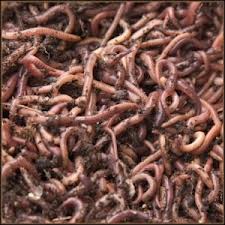
Nobody loves me, everybody hates me, thank I’ll go and eat worms
Long ones short ones fat ones skinny ones
Worms that squiggle and squirm
That’s called a kids’ song, or a campfire song, and in some versions the words are different, but that’s how I learned it in the wolf cubs as an eight-year-old, and the words often come back to me when, as quite often happens, I find that nobody loves me and everybody hates me. This is the case at present so I was heartened by watching a doco this morning on worms, and I thought I’d cheer myself by writing about them rather than eating them.
I’m talking earthworms here, just to narrow things down. The longest worm that we know of (not an earthworm) is the bootlace worm, Lineus longissimus, of the phylum Nemertea, specimens of which grow as long as 55 metres – though they’re stretchy, so that might be cheating. As for earthworms, Australia’s regarded as a hotspot of wormy diversity, according to wormologists, with the giant Gippsland earthworm, Megascolides australis, coming in as one of the biggest at up to 3 metres, and over an inch in diameter. You could base more than a couple of hefty meals on a critter that size, but sadly they’re a threatened species, another casualty of human encroachment on habitat. In fact, a great many of Australia’s 1000 or so known native earthworm species are in the same position, but for obvious reasons they don’t get the same attention as bilbies and potoroos.
As every gardener knows, worms are much valued for the way they transform the soil, providing new opportunities for the growth and development of plants. They also aerate the soil – letting in air, releasing carbon dioxide – with their burrowing activities. They don’t simply become two if they’re cut in half, though they can regenerate a chopped-off tail. They’re delicate and can be easily broken if pulled at, and in fact they have tiny gripping hairs, called setae, all over their bodies which makes them especially hard to pull out of the ground, as if you’d want to. Like me, they’re hermaphrodites (I think that’s why everybody hates me) and they breed by stretching alongside each other and exchanging sperm, a process that often lasts for many hours.
Okay, I’m not a hermaphrodite, but I may as well be, and a two-headed one at that.
Worms make great food for birds, platypuses and the occasional intrepid toddler, and their excreta, aka castings, the end-product of incessant organic digestion, is taken up by plants, and is full of such goodies as phosphorus, nitrogen, calcium and magnesium. They like and need moisture, and in fact the giant earthworm can be detected by the underground squelching and gurgling created by their activities.
The basic worm anatomical structure, whether you’re talking land or sea, has been around a very long time, and obviously has proved very effective and enduring. It’s believed that the first-ever vertebrate creature (according to current knowledge), the ocean-living chordate Pikaia gracilens, incorporated the beginnings of a backbone into its worm-like body some 500 million years ago. That makes worm-eating a form of cannibalism. In fact, eating itself is a form of cannibalism and we really should stop.
Let’s look at how earthworms get around. The direction of their movement is a response to light and to soil chemistry as it impacts on skin cells. They move by expanding and contracting their muscles, anchoring themselves as they go with their setae, which they put out and retract as they go. Skin secretions help to bind the soil around them, easing their burrowing passage. Like us, they move a lot more sluggishly (probably not a good choice of words) in the cold weather.
So, that’s it for worms, for now. I’ve opened a few cans of them in my time, but I’ve always been reluctant to examine the contents. See how I’ve changed.

a dish of mopane worms – a fave from Zimbabwe
on thinking like them to learn how they think

An interesting conundrum from Clive Wynne’s book Do Animals Think?
First, imagine you are given four cards and told to test the rule that a card with a vowel on one side must have an even number on the other side. Let’s say the cards in front of you show an E, a K, a 7 and a 4. Which would you turn over? Most people find this a very difficult problem. Most turn over the E and some also turn over the 4. And yet the 4 can tell you nothing: Who cares what’s on the other side of an even number? The rule being tested does not say that the flip-side of an even-numbered card can not be a consonant, only that the flip-side of a card with a vowel cannot be an odd number. So you would learn nothing by turning over the 4. The correct answer is to turn over the E [see if the vowel has an even number on its reverse] and the 7 [check that there’s no vowel there]. Only about 5% even of the college-educated population give the right answer to this one. It’s a tough logical nut to crack.
Now consider this problem. Imagine that you are shown four people and told to test the rule that a person must be over the age of twenty-one to drink beer. One person is drinking Coke, one is drinking beer, the third is twenty-three years old, and the fourth, fifteen. Whom must you check [what they are drinking or what age they are] to ensure that the rule is being followed? Here nobody has any trouble. We don’t care what the twenty-three-year-old drinks, nor what age the Coke drinker is, but we do need to check the age of the beer drinker and the beverage of the fifteen-year-old. Nothing could be simpler. Hardly anybody gets this one wrong.
And yet logically these are absolutely identical problems. There is no difference in the type of reasoning required to solve these two puzzles. Why the big difference in performance?
Wynne, a psychologist with a strong interest in, and a wide knowledge of, research in other-species reasoning, is making a very important point with application to the testing of other animals and their ability to solve problems. It’s hopefully obvious that the reason we do so much better with the second problem is that it’s a recognizable real-world problem about obeying the rules and not cheating or doing the ‘wrong thing’. We’re much more motivated to come to a quick and accurate solution than with the much more abstract first problem. So when we set problems for other species to solve, we need to understand that what motivates them to solve a problem might be very different to what motivates humans.
Wynne’s book, which I was motivated to read as further background to, and an extension of, my animals r us post, makes for excellent reading, as he’s healthily sceptical of, and pokes some holes in, research claims about other-species reasoning and mental processes, such as they are. He also provides some fascinating information, scientific and historical, about, inter alia, bats, bees and pigeons. My only quibble, perhaps a minor one, is that, both in the title of his book and throughout the writing, he refers to animals as though we’re not one of them. Not that he has any truck with the ‘we’re special and the proper end of evolution’ view. In fact I really don’t know why he writes of animals in this way – it’s as if he’s half-convinced that our development of language and our complex ‘theories of mind’ have really taken us to some level beyond the mammalian. They haven’t. We’ll never stop being mammals, though we’ll continue to amaze ourselves with what we can do with the difference between ourselves and other mammals.